
Match the kit to its history
Find the jetter or inspection kit by its asset identity. Check its recorded holder, condition and service details before assuming it is available for the next call-out.
Leave a record for the next dispatcher
Update custody when the kit moves and record a fault or return condition. Reopen the same asset to check that the dispatcher can identify who has it now.
Record a fault against the exact jetter or camera
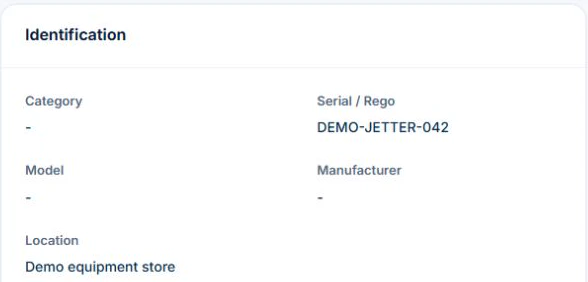
Open the equipment asset and check Identification, location and custody. The sample jetter has its own serial. If the next job needs the equipment, check its Maintenance history and use Notes to record an unresolved fault against that serial.
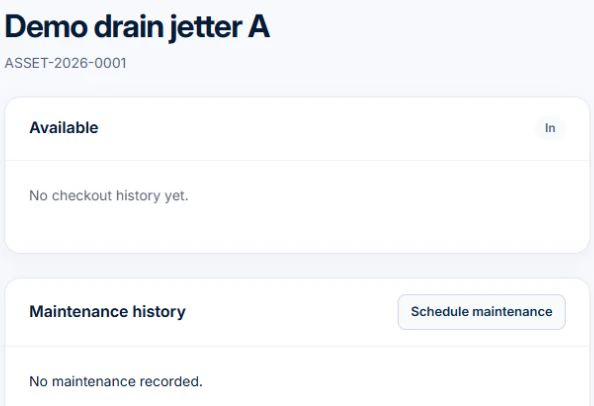
With the relevant access, record the service title, type, date and provider under Schedule maintenance. Record the service outcome when it is known. Check actual equipment condition and any required inspection before use.
Separate business equipment from the customer’s installation
Record the tool or plant’s ID, model and serial number and the person responsible for its history. Customer fixture findings belong with the customer job; repairs to the business’s jetter or pump belong with that equipment. This distinction keeps a return visit from being mistaken for equipment maintenance.
Capture enough detail for the service provider and next user
Describe the reported fault and retain the service or inspection evidence. Record who assessed the item and the outcome. Check relevant instructions for the next inspection or maintenance action rather than assuming every item follows a calendar interval.
- Equipment ID and model
- Instruction and service reference
- Reported issue and date
- Provider’s work and outcome
- Current assessed availability and next action
Use an unresolved fault as the record test
Illustrative case: a jetter has a reported fault and a repair appointment is booked. Keep it unavailable through your actual controls until the relevant assessment is complete. A booked repair is not a completed repair. Retain the later evidence and communicate the use decision to the people arranging jobs.
Keep the record separate from permission to use the equipment
Use manufacturer instructions and the applicable competent assessment to decide inspection, maintenance and return to service. Follow your process for isolating or withdrawing unsafe equipment; a software status is not a physical control. Check requirements with the relevant state or territory authority where needed.
AxiomBlue Basic and Professional include an asset register with equipment identity, notes, status and custody history. Keep fault and service references in the asset notes or the relevant job and document records, then update the status through your process. Test how the evidence can be found before adopting the setup. Uploads need a paid plan. Do not assume sensor readings, live equipment location or a repair decision is supplied automatically.
Common questions
Questions about this process
Is booking a repair enough to mark a jetter available?
No. Retain the unresolved fault and follow the appropriate assessment and control process. Booking, repair completion and permission to use are different states.
Put it to work
Your practical checklist
- Identify the tool or plant separately from customer equipment.
- Retain instructions and fault details.
- Record repair appointment and completed outcome distinctly.
- Communicate the assessed use decision.
- Review the next action before assigning the kit.
See the records in Axiom Blue
Try the workflow with a familiar job.
Features and usage limits vary by plan. Review the tools relevant to your process before choosing your setup.