
The starting point
Choose one repeat task, define its conditions and test the normal case and exceptions with sample records. Review the outcome before enabling it for customer work.
Pick a task with a clear beginning and ending
A follow-up on an unanswered quote is easier to define than “automate our sales”. Write down the event that starts the process and what makes further contact unnecessary.
Use one owner for the workflow. They should know what it does, how to review its runs and how to stop it if the business process changes. A workflow with nobody responsible is difficult to maintain.
Describe the rules before building the steps
Decide which records qualify, how long to wait, which channel to use and what information the message needs. Include the situations where the action should not happen.
For a quote follow-up, you might need to check its current status before contacting the customer. For an invoice reminder, review the balance and any exceptions. These are examples to validate against the triggers and conditions available in your setup, not a promise that every process is configured automatically.
- Trigger: what starts the workflow?
- Conditions: which records qualify now?
- Timing: when should the action happen?
- Action: what should it do, and for whom?
- Stop or exception: when should a person take over?
Test more than the happy path
Use sample records to check a normal run, a record that should be excluded and a record that changes during the wait. Check the recipient, message content and whether the action happens more than once.
If the process sends SMS, include credit requirements and permissions in the review. If it sends an email, inspect the actual wording and link. Do not enable messages against live customers just to see what happens.
Keep the workflow connected to the real process
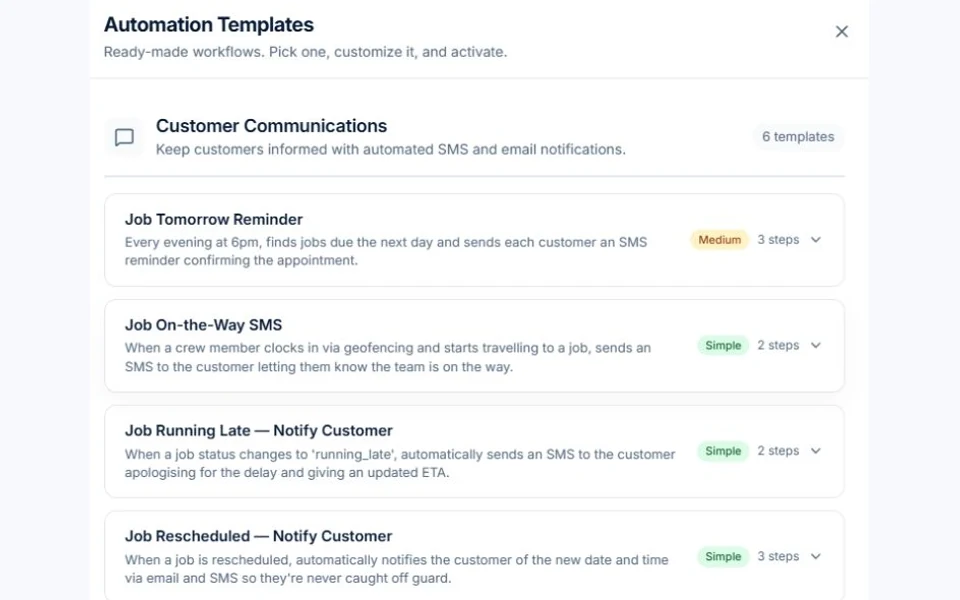
Axiom Blue’s Professional plan includes the visual workflow editor, templates and actions. Inspect the available nodes and the records they use. A template is a starting point to adapt and verify, not evidence that every business exception is covered.
After rollout, review failures and unexpected outcomes. If a staff member changes how a job is closed or an invoice is handled, check whether the workflow needs to change too. Reliable automation needs an accurate record to act on.
Give a quote follow-up a clear next step
Example message: “Hi [name], checking whether you had any questions about quote [number] for [work]. You can review the scope at [link]. If the timing or work has changed, reply and we’ll help with the next step. Thanks, [business].”
Use the message only when the quote is still relevant and awaiting a response. Test accepted, declined and changed records before enabling the process. A customer reply may need a person to take over; the wording should make that easy.
Put it to work
Your practical checklist
- Choose one repeat task and name its owner.
- Write the start, action and stop rules.
- Review the available template and conditions.
- Test included, excluded and changed records.
- Enable only after reviewing the intended outcome.
See the records in Axiom Blue
Try the workflow with a familiar job.
Features and usage limits vary by plan. Review the tools relevant to your process before choosing your setup.